
What Homeowners Should Ask Before Hiring an Epoxy Flooring Contractor
A professionally installed epoxy floor can transform a garage, basement, workshop, utility room, or commercial space. But the final result depends on much more than the color you choose. Surface preparation, moisture conditions, product selection, installation methods, and cure time can all influence how the floor looks and performs.
Homeowners often receive proposals that appear similar on the surface. One contractor may describe a “full epoxy system,” another may offer a “one-day floor,” and another may simply quote a price per square foot. Without asking detailed questions, it can be difficult to understand what is actually included.
The goal is not necessarily to hire the contractor with the longest presentation or the lowest price. The goal is to identify the installer who can clearly explain the condition of your concrete, the preparation required, the materials being proposed, and what you should realistically expect after installation.

A Professional Estimate Should Include More Than a Price
A reliable proposal should help you understand the complete flooring system. That includes the existing slab, preparation work, repairs, primers or basecoats, decorative layers, protective topcoats, estimated schedule, and limitations.
Exact requirements will vary by project. An older garage with oil contamination and visible cracking may require a different process than a newer basement slab. A floor exposed to vehicle traffic, sunlight, chemicals, standing water, or frequent cleaning may also need a different finish than a lightly used storage room.
Contractor Screening Snapshot
Listen for specific explanations rather than vague promises. A qualified installer should be able to describe both the benefits and the limitations of the proposed system.
How Much Experience Do You Have With This Type of Floor?
General construction experience is useful, but decorative concrete flooring is a specialized trade. Ask whether the contractor regularly installs the specific style you are considering, such as a full-flake garage system, solid-color epoxy, metallic epoxy, quartz, or a clear protective coating.
Request photographs of completed projects that are similar in size, use, and condition to your own. When possible, look for close-up images of edges, doorways, control joints, wall transitions, drains, stairs, and other details—not only wide photographs taken immediately after installation.
How Will You Prepare the Concrete?
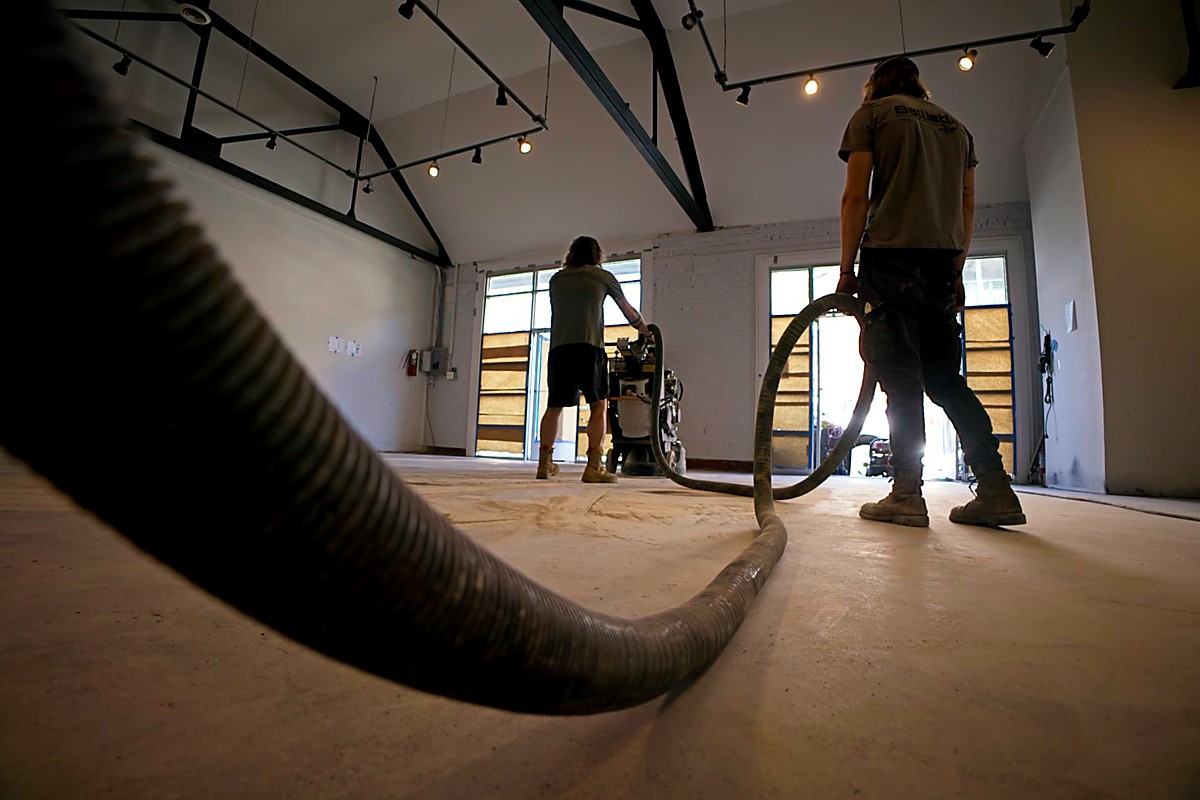
Surface preparation is one of the most important parts of a coating installation. The contractor should explain how contaminants, laitance, weak surface material, old coatings, sealers, adhesives, and other bond-inhibiting materials will be addressed.
Depending on the slab and coating system, preparation may involve mechanical grinding, shot blasting, localized scarification, cleaning, vacuuming, or a combination of methods. The appropriate method should be selected for the actual floor—not simply because it is the fastest or least expensive option.
Ask what surface profile is required by the coating manufacturer and how the contractor will verify that the slab is ready before applying the first coating layer.
Will You Evaluate the Slab for Moisture?
Concrete can appear dry at the surface while still containing or transmitting moisture. Excess moisture may contribute to adhesion problems, bubbling, discoloration, or other coating failures.
Ask whether the contractor recommends moisture testing for your project and which method will be used. The appropriate evaluation may depend on the age of the slab, whether the space is above or below grade, local conditions, previous flooring failures, and the requirements of the proposed coating system.
A responsible contractor should also explain what happens if the test results fall outside the acceptable limits for the selected product.
How Will Cracks, Spalls, and Concrete Joints Be Handled?
Not every line in concrete should be treated the same way. Static cracks, moving cracks, saw cuts, control joints, expansion joints, spalled areas, and slab transitions can require different repair or detailing methods.
Ask which defects are included in the proposal and which conditions may result in additional work. The contractor should also explain whether repaired cracks or joints could become visible again if the slab continues to move.
Be cautious of promises that every crack can be permanently hidden. Coatings can improve appearance, but they do not stop structural movement within the concrete.
What Exact Coating System Are You Proposing?
“Epoxy floor” is a broad description, not a complete specification. Ask the contractor to identify each layer of the proposed system and the purpose of that layer.
A project may include a primer, moisture-control layer, pigmented basecoat, decorative flake or metallic layer, grout coat, and one or more protective topcoats. Other systems may use fewer or different layers.
Ask for the manufacturer and product name of each material. You should also understand whether substitutions are allowed and whether any change will require your approval.
Not Every “Epoxy Floor” Proposal Includes the Same Work
| Proposal Detail | More Complete Explanation | Vague Explanation |
|---|---|---|
| Surface preparation | Preferred: Identifies the mechanical preparation method, edge work, dust control, and treatment of existing coatings. | Caution: Says only “prep floor” or “clean concrete.” |
| Repairs | Preferred: Defines which cracks, spalls, and joints are included and how they will be addressed. | Caution: Promises to “fix everything” without defining the scope. |
| Coating layers | Preferred: Lists each product, its purpose, and where it appears in the system. | Caution: Describes the entire installation as “two coats of epoxy.” |
| Return to service | Preferred: Separates recoat time, light foot traffic, vehicle traffic, and full cure expectations. | Caution: Provides a single time without explaining limitations. |
| Warranty | Preferred: Defines the warranty term, covered failures, exclusions, and claim process in writing. | Caution: Uses “lifetime warranty” without written conditions. |
How Much Material Will Be Applied?
Two contractors can use products from the same general coating category and still install very different floors. Material coverage, film thickness, number of coats, decorative broadcast rate, and topcoat selection all affect the completed system.
Ask whether the proposal defines approximate coverage rates or installed thickness. For a flake floor, ask whether the finish will use a light, medium, heavy, or full broadcast. For a clear topcoat, ask whether one or multiple coats are proposed.
More material is not automatically better in every situation. The important point is that the contractor follows the product requirements and installs the system described in the proposal.
What Environmental Conditions Are Required During Installation?
Temperature, humidity, slab temperature, ventilation, condensation, direct sunlight, and weather can affect application and curing. Exterior doors may need to remain closed or partially controlled, while some spaces may require ventilation or temporary environmental management.
Ask what conditions must be maintained before, during, and after the installation. This is especially important in unconditioned garages, cold environments, humid basements, and projects scheduled during periods of extreme weather.
When Can the Floor Return to Service?
Installation time and full cure time are not always the same. A floor may be ready for another coating layer before it is ready for foot traffic, furniture, vehicle traffic, chemical exposure, or heavy equipment.
Ask for a written schedule that distinguishes among the major stages. The contractor should also explain whether cooler temperatures, higher humidity, additional coating layers, or jobsite conditions could extend the timeline.
- When should the room be emptied?
- How long will preparation and repairs take?
- When can people walk on the floor?
- When can storage items or furniture return?
- When can vehicles or equipment return?
- When does the coating reach its intended full cure?
What Does the Warranty Actually Cover?
A warranty should be evaluated by its written terms, not only by its advertised length. Ask whether the warranty covers adhesion failure, peeling, discoloration, loss of gloss, cracking, staining, wear, chemical damage, or other conditions.
Also review the exclusions. Warranties commonly distinguish between product defects, installation defects, substrate movement, moisture problems, impact damage, abuse, improper cleaning, and normal wear. These details should be available before you approve the work.
Ask whether the warranty is provided by the contractor, the product manufacturer, or both. You should also understand how a claim is submitted and what documentation must be retained.
How Should the Finished Floor Be Cleaned and Maintained?
Even durable flooring systems require routine care. Ask which cleaners, tools, and maintenance methods are recommended. The contractor should explain how to remove dust, road salt, grease, tire marks, spills, and other common contaminants without leaving residue or damaging the finish.
You should also understand which activities may scratch or dull the coating. Furniture legs, dragging metal equipment, kickstands, abrasive debris, harsh chemicals, and neglected spills can affect appearance over time.
Finally, ask whether the floor can be refreshed with a maintenance coating in the future and which signs indicate that professional service may be needed.
What Should Be Included in the Written Proposal?
Before comparing prices, confirm that every contractor is quoting a similar scope of work. A detailed proposal should address the following items where applicable:
Do Not Compare Price Until You Compare Scope
A lower quote may represent a genuine efficiency advantage, but it may also omit preparation, repairs, moisture evaluation, coating layers, material quantity, or protective topcoats included in another proposal.
Ask each contractor to describe exactly what is included. When the scope is clear, you can compare the proposals based on preparation, system design, installer experience, schedule, warranty, and total project value—not simply the final number.
Additional Questions Worth Asking
- Are you appropriately licensed and insured for this work? Requirements vary by location, so verify the documents applicable to your project.
- Who will perform the installation? Ask whether the work will be completed by employees, subcontractors, or a combination of both.
- How will the home and surrounding property be protected? Discuss dust, access routes, adjacent walls, doors, landscaping, stored belongings, and ventilation.
- What happens if hidden damage is discovered? The proposal should explain how additional repairs and change orders will be handled.
- Can I approve the final color and decorative blend? Review physical samples whenever possible and understand that lighting and installation technique may influence the finished appearance.
- What should I do before the crew arrives? Confirm responsibilities for clearing the room, disconnecting appliances, controlling pets, providing power, and maintaining access.
The Bottom Line
Hiring an epoxy flooring contractor should involve more than choosing a color and comparing prices. The strongest contractors help you understand your concrete, identify potential risks, define the preparation process, recommend a complete coating system, and establish realistic expectations for appearance, cure time, maintenance, and long-term performance.
A professional installer should welcome informed questions. Clear answers protect both the homeowner and the contractor by ensuring that everyone understands what will be installed before work begins.
Use this guide during your consultations, request a detailed written proposal, and compare the complete scope of work before selecting the contractor for your project.
Planning a Decorative Concrete Floor?
Learn more about preparation, coating systems, protective finishes, and long-term floor care before your project begins.
Explore Meghan's Flooring Resources